
On a Tampa house, your plumber sits on the critical path seven separate times.
Underground before the pour, rough-in before drywall, tub set, sewer, water service, gas, final. Seven chances for somebody else's schedule to become your problem. We do all seven with one crew that already knows your job.
Seven plumbing inspections, spread across the whole build
This is the City of Tampa's own residential new-construction list. Most plumbers won't put it on a website. We think a builder deciding who to hire deserves to see exactly where we land on their calendar.
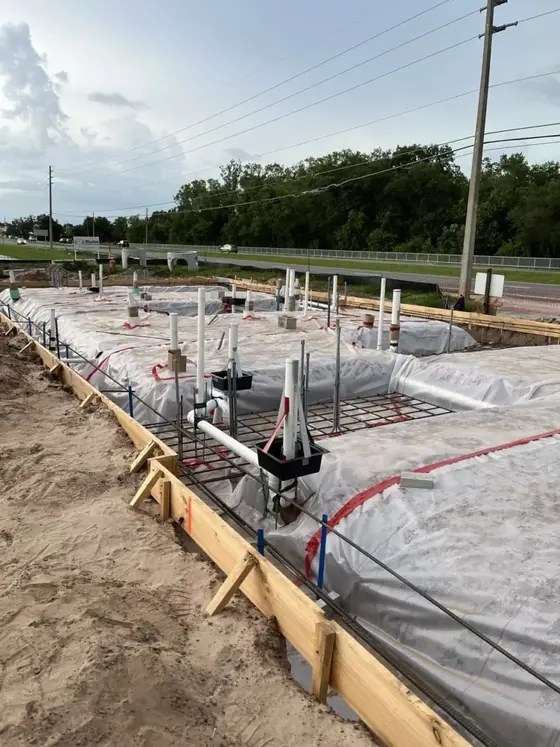
Underground rough-in
Everything below the slab: drain, waste and vent laid to grade in the trenches, stubbed up and located. This one gates the pour, so nothing else on your site moves until it passes.
Gas rough-in
Gas piping roughed and pressure-tested by our own crew.
Rough-in
Above-slab work: the DWV stacks and vents, water lines to every fixture, valves set and boxes mounted. Roof and framing have to be up first, and drywall can't start until it passes.
Tub set
Tubs and shower pans in place and connected, inspected before they're closed in. A separate trip, and one that catches problems while a tub can still come back out easily.
Sewer
The line from the building to the utility connection, at the right fall and inspected open. Sometimes the same visit as water service, often not.
Water service
The supply from the meter to the house. Needs the utility to have set the meter, which is the piece of the schedule none of us control.
Final
Every fixture set, connected and working, water heater in and fired. The last plumbing inspection on the list, and one of the last things standing between you and a certificate of occupancy.
The same crew, every time
The people who laid your underground are the people who come back for trim. Nobody re-reads the plans on your dime, and nobody discovers in month six what was decided in month one.
Seven touchpoints on a twenty-eight step run
Plumbing is not one visit near the start. It brackets the entire build, from the trenches before the slab to the final walk before occupancy. A plumber who is slow to show up doesn't cost you a day once. They cost you a day seven times, and each one lands on a trade waiting behind them.
Inspection names and their positions are taken from the City of Tampa's residential new construction inspection list, which notes that it is a guide and that additional inspections may be required depending on scope. Other jurisdictions in Tampa Bay and Sarasota order things slightly differently, and we work to whichever list your permit sits under.
Underground, top-out, trim
Same house, three completely different sets of problems. Here's what each one actually involves and what we need from you before it starts.
Underground, before the pour
Trenching inside the stem wall, laying drain, waste and vent to grade, setting closet bends and stub-ups where the plans say fixtures go, then pressure or water testing before it's covered. Locates called, sleeves where they belong, and everything shot to the right fall.
Get this wrong and the fix is a jackhammer through a finished slab. It's the phase where being careful is cheapest.
Top-out, once the roof and framing are up
Stacks and vents through the framing to the roof, water lines to every fixture, tub and shower valves set, washer and hose-bib boxes mounted, everything strapped and plated so the drywallers and the electricians don't put a screw through it. Tested and left under pressure for the inspector.
Trim, at the end
Toilets, faucets, sinks, disposals, shower trim, the water heater set and fired. This is the phase your buyer actually touches, so it's the one where a rushed job shows. We'd rather be there a day longer than leave a punch list for your closing.
And afterwards
If something needs looking at after the keys change hands, it's the same company that installed it, not a warranty number in another state. New construction work carries a 1-year warranty at no charge.
What actually holds up a slab
In our experience it is almost never the plumbing itself. It's information arriving late. These are the six that cost real days, and most of them are fixable with one phone call in the right week.
Fixture selections still not final
A freestanding tub and an alcove tub want the drain in different places. If the buyer is still choosing in the week we're trenching, somebody is going to be wrong.
Dimensions that don't match the plans
Stem wall goes in an inch off, or a wall moves during framing, and suddenly a stub-up is inside a stud bay instead of a wall cavity. Worth a five-minute check before we lay anything.
Utility hasn't set the meter
Water service can't be inspected without one, and no amount of pressure from either of us makes a utility move faster. Worth starting that application earlier than feels necessary.
Locates not called, or expired
Tickets have a life, and an excavator on a site with a stale locate is a conversation nobody enjoys. We'd rather confirm than assume, every time.
Another trade in the same wall
Duct and drain both want the same chase. Sorted in advance it's a drawing. Sorted on site at eight in the morning it's two crews standing still.
Revisions that never reached the field
Plans change, and the set in the truck is from March. We ask for the current revision before every phase rather than discovering it at inspection.
None of that is glamorous.It's just the difference between a plumber who arrives and a plumber who arrives ready.
Send plans for a bidWhat we need from you to bid it
Send what you have. If some of this is still open, say so and we'll bid around it rather than pretend it isn't.
- Current plansFloor plan and plumbing sheet, whatever revision is live today. PDF or DWG both work; the dispatcher tells you where to send them.
- Fixture scheduleOr a note saying it's not settled. Freestanding tubs, wall-hung toilets and pot fillers all change the underground.
- Your target datesWhen you want to pour and when you want to close. We'll tell you honestly whether we can hold them.
- Jurisdiction and permit statusWhich city or county, and whether the permit is pulled. On new construction, the general contractor pulls the permits.
- Site conditionsWater on site, access for a machine, and anything unusual about the lot. Sand, muck and a tight infill are three different jobs.
- Who else is in the wallsMechanical and electrical contacts, so the chase conversation happens over a drawing instead of on your slab.
Paperwork. Certificates of insurance, W-9 and lien releases are normal and we handle them without drama.
What we take on
Custom homes, spec homes, and commercial shells. The plumbing is the same trade; the paperwork and the pace are not.
Custom single family
Where the fixture list is ambitious and the buyer is emotionally invested. More coordination, more changes, and the phase where a plumber who explains things is worth having on site.
Spec and production
The same plan four times means the fourth should be faster than the first. Predictable dates matter more than anything clever here, and that's what we optimise for.
Additions and remodels
The hard part is the joint: new PVC meeting whatever the house already has, at the right fall, without condemning the existing system. Often worth scoping the old line before committing.
Restaurants and commercial
Full plumbing from the ground up for restaurant build-outs and commercial shells, including interceptors and the equipment connections that come with a commercial kitchen.
See commercial workWater and sewer service
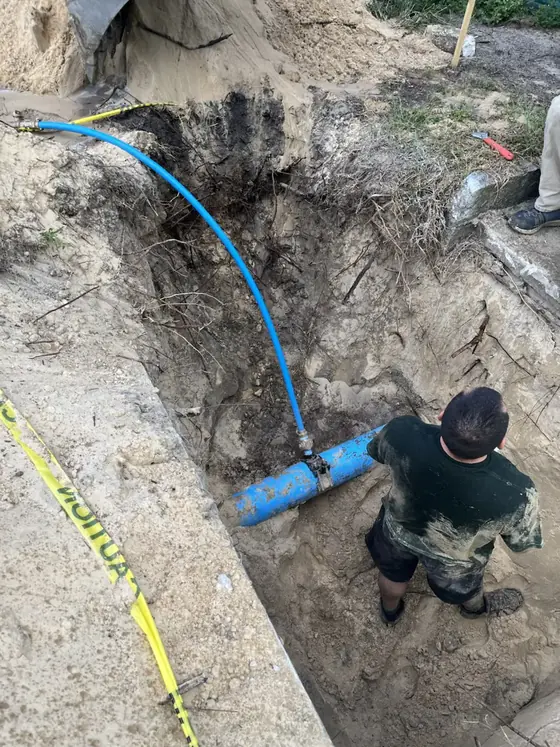
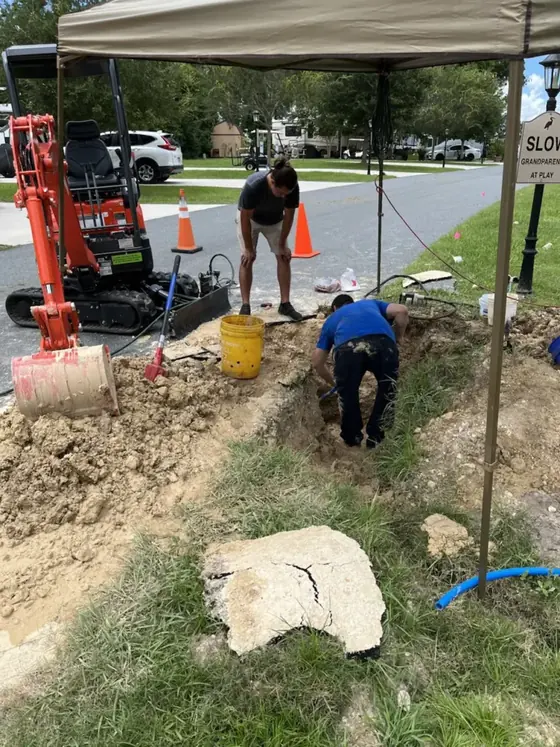
The runs that connect your building to the utility, with the excavation that goes with them. We do it with our own equipment.
Water treatment, roughed in
Tampa Bay water is hard enough that most buyers end up softening it. A loop and a drain roughed in during construction costs a fraction of retrofitting one into a finished garage.
Why it matters hereOur work
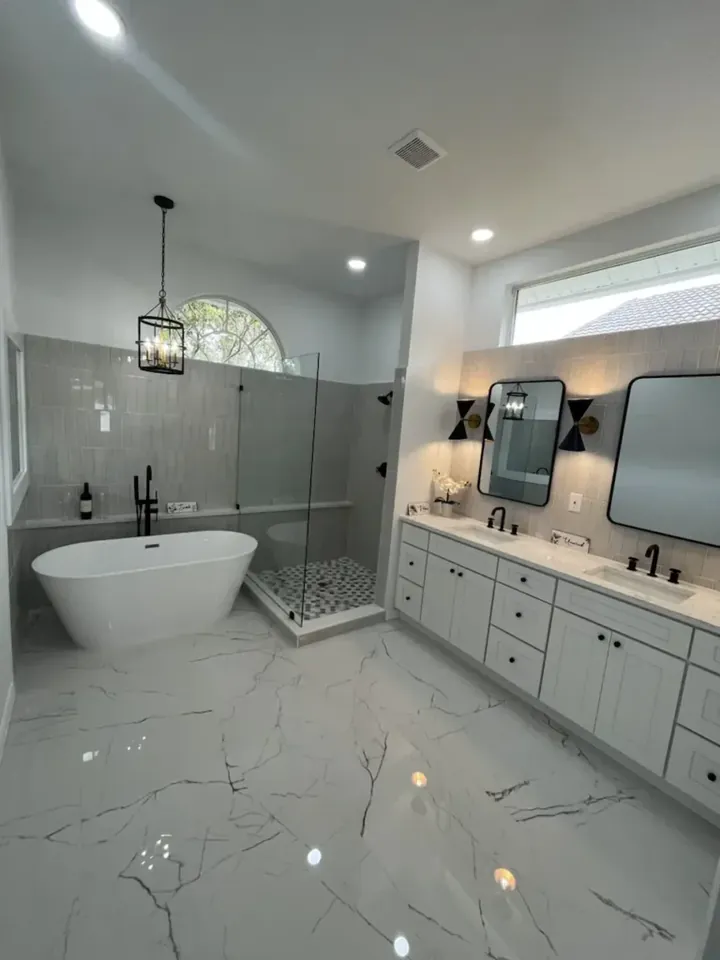
Trenches, service lines and what it all turns into.
Why there's no price on this page
New construction is the one job that genuinely can be priced on paper, because the plans tell us the fixture count, the runs and the conditions. What we won't do is put a number per square foot on a website, because the same square footage with six bathrooms and a pot filler is a different job entirely.
Send the plans and you'll get a real bid against them, with the assumptions written down so you can tell what changed if the drawings do.
- Fixture count and typeNot square footage. Six bathrooms is six bathrooms.
- What's under the lotClean sand, muck, rock or a high water table.
- How far the utility isMeter at the property line, or a long run to the street.
- Access for a machineAn open lot and a tight infill are not the same excavation.
- Your scheduleA job we can sequence sensibly prices better than one we can't.
- JurisdictionPermit and inspection fees differ by city and county.
What builders ask
Will you hold a date three months out?
We'll tell you honestly what we can commit to, and if something slips we'd rather you hear it from us two weeks early than on the morning. A plumber who promises every date and misses a third of them is worse for your programme than one who says no occasionally.
Do you do the underground and then disappear?
No. We bid all three phases and we do all three. The value of one plumber from trench to trim is that nobody has to reverse-engineer what the last crew did, and there's no argument about whose problem a defect is.
Who pulls the permit?
On new construction, the general contractor pulls the permit. We schedule and meet the inspections.
What happens if an inspection fails?
We fix it and re-call it, and we tell you the same day rather than letting you find out when the next trade can't start. Corrections happen to everybody at some point; what separates contractors is how fast the re-inspection gets scheduled.
Can you work from a BIM model or a coordinated set?
Send what you have and we'll tell you plainly what we can and can't use. We'd rather be honest about that than claim a capability and then work off a printed sheet anyway. For most residential work a current PDF set and a fixture schedule is what actually gets used in the field.
Do you handle the water treatment loop?
Yes, and it's worth deciding early. Tampa Bay water is hard, most buyers soften it eventually, and roughing in a loop and a drain during construction costs a fraction of cutting one into a finished garage later. It's a small line on your bid that becomes a selling point on the listing.
Do you go outside Tampa Bay?
Tampa Bay is home, and we take work in Sarasota as well. For anything further, ask. The answer depends on the size of the job and what else is on the board that month, and we'd rather give you a straight no than a yes we regret.
Send the plans. Get a real bid.
Floor plan, plumbing sheet and your target dates. You'll get a number against the drawings with the assumptions written down, and a straight answer about whether we can hold your schedule.