
Nobody wants this job done twice. So we look before anyone digs.
Camera down the line first, locate the fault, and show you the footage. Then you decide between a spot repair and a replacement knowing what's actually down there — not on somebody's hunch.
A drain you can clear. A line you have to deal with.
We'd rather clear a clog and leave than sell you an excavation. These are the signs that say the pipe itself, not what's in it, is the problem.
It backs up again, and again
Cleared in spring, back by summer, back again at Christmas. A line that re-clogs on a rhythm has something structural in it — roots at a joint, or a low spot holding water.
Everything backs up together
Toilet gurgles when the washer drains, tub fills when you flush. Multiple fixtures at once means it's downstream of all of them — the main line.
Smell in the yard or the house
Sewer gas means the system isn't sealed the way it should be. Outdoors it's often a cracked line; indoors it can be a dry trap — worth telling apart before you dig anything.
A patch of yard that's always green or soggy
Grass that thrives in a stripe over the line, or ground that stays wet with no rain. Something is feeding it from below.
New cracks in the slab or floor
A leaking line under a slab washes soil out from under it. That's when a plumbing problem starts becoming a foundation problem, and the order you fix things in matters.
The cleanout in the yard is standing full
Water sitting at the cleanout means the blockage is past it — between your house and the city main, where the pipe is buried and old.
Not sure which one you have?That's what the camera is for. It costs a lot less than an excavation, and quite often it tells us to clear the line and leave you alone.
Book a camera inspectionIf your house is from the sixties or earlier, do the arithmetic
The home inspectors' association puts underground cast-iron waste pipe at 50 to 60 years. A house built in 1965 is on pipe that is sixty-one years old this year. That doesn't mean it has failed — it means it's out of warranty with the universe.
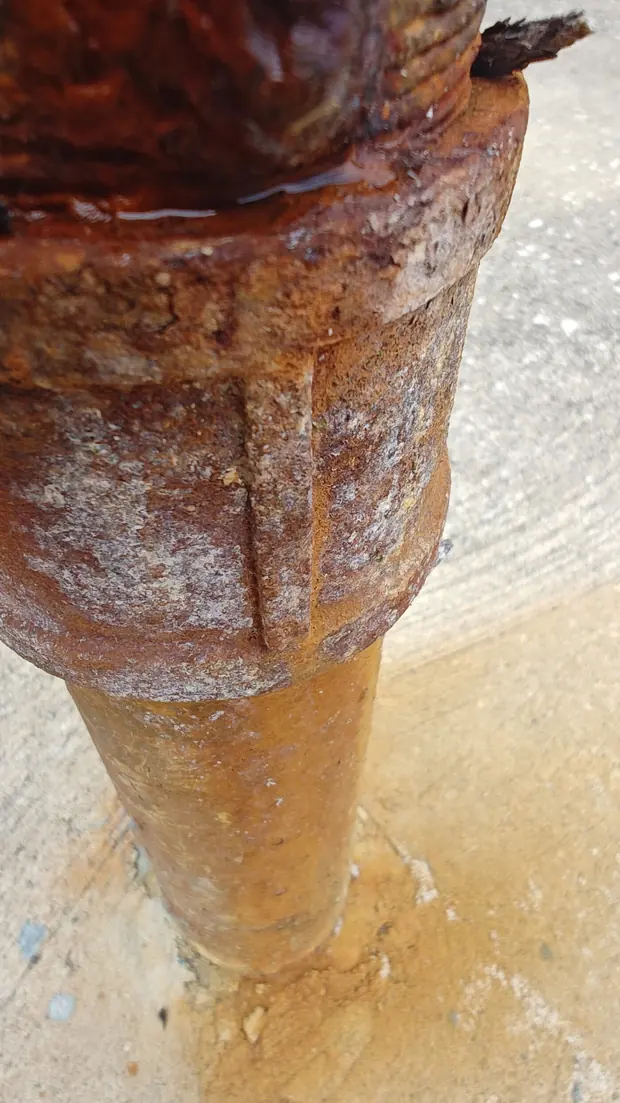
Cast iron
Rusts from the inside out. The bore narrows with scale and rust, the bottom of the pipe — the "channel" — wears through first, and then soil starts washing in. Common in Florida homes built before the mid-seventies.
Worth scoping, even with no symptomsClay
Short sections with joints every few feet, and roots love the joints. Clay doesn't corrode — it cracks and shifts, and a root mat at a gap catches everything that floats past.
Root-prone at every jointPVC
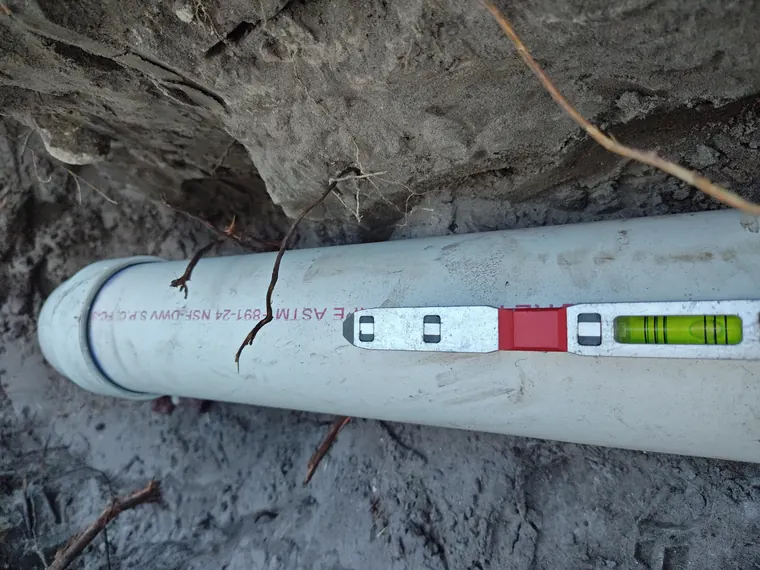
What goes back in when we replace a line. Smooth bore, long runs with few joints, doesn't corrode and roots can't get through a solvent-welded joint the way they get into clay.
What we installRoots, in any of them
Roots don't break a good pipe — they find a joint or a crack that's already there and grow in through it. Which is why cutting them out treats the symptom and the camera finds the cause.
A belly
A section that sagged, so water stands in it and solids settle. Cabling a belly clears it for a while and changes nothing. The only real fix is correcting the pipe's fall.
Buying an older house?
A sewer camera during the inspection period is one of the cheapest pieces of information you will ever buy on a pre-1975 Florida house. Finding a failed line after closing is entirely your problem.
Book a pre-purchase scopeLife-expectancy figures from InterNACHI's standard life expectancy chart — cast-iron waste pipe below ground 50–60 years, ABS and PVC 50–80. You'll see shorter numbers quoted around Florida by contractors; we'd rather cite the inspectors' association and let your own camera footage decide.
Three steps, in that order, every time
Digging in the wrong place is expensive twice — once for the hole, once for the hole you should have dug.
Camera down the open line
We clear enough to get the camera through, then run it the length of the line. You watch it with us. Roots, a crack, a belly, a collapsed section or simply grease all look completely different, and they have completely different answers.
Ask for the footage — it's yours, and it's what an insurer or a buyer's agent will want to see.
Locate and mark it
A sonde in the camera head tells us exactly where the fault is and how deep, and we mark it on the ground. That's the difference between one small excavation and a trench across your yard.
Then you choose, with a number in front of you
Spot repair, partial replacement, or the whole run — priced with what we saw, not with what we assume. If the honest answer is "clear it and watch it," that's an answer we give.
Permit, dig, replace, inspect, restore
Pulled in your jurisdiction and inspected before it's covered. Restoration of the ground, slab or floor is quoted and billed separately.
Six jobs that all get called "sewer repair"
They vary enormously in cost and disruption. Knowing which one you're looking at is most of the decision.
Spot repair
Cut out the broken section, put in new, couple it back. The cheapest outcome, and the right one when the camera shows a single defect in an otherwise sound line.
Open-cut replacement
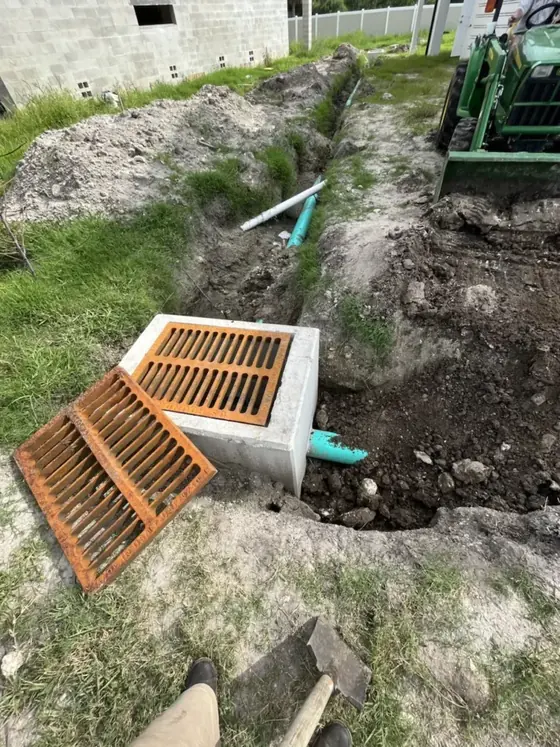
Trench from the house to the city connection and lay a new PVC line at the right fall. Disruptive to the yard, straightforward underneath, and it resets the clock on the whole run.
Under-slab replacement
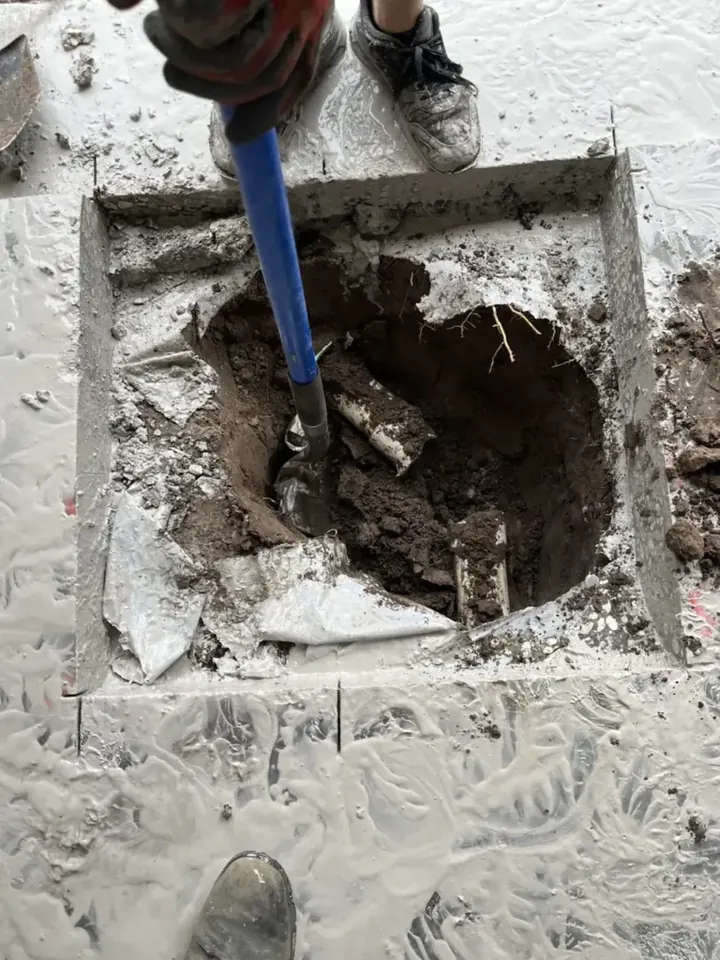
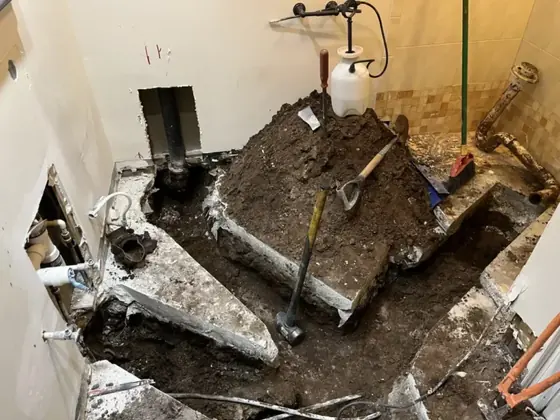
Cutting the floor to reach the drain lines buried in the slab. It is loud, dusty and real work — floor protection, dust control and an agreed plan for the finishes before a single blade touches concrete.
Lift stations and pumps
Plenty of Florida properties sit below the sewer main and rely on a pump chamber. When the pump, float or panel fails, the symptom looks like a blocked line but the fix is completely different.
Re-routing instead of digging
On the right layout, the failed line under the slab gets abandoned and a new drain runs through walls or overhead instead. It isn't always possible — it depends on where your fixtures sit — but it's the first thing we check before proposing to cut concrete.
Always checked firstAdding a cleanout
Plenty of older houses have no accessible cleanout, so every service call starts by pulling a toilet. Putting one in is a modest piece of work that makes every visit after it faster, cleaner and cheaper — including ours.
About trenchless. Lining and pipe-bursting can avoid a trench on the right job, and they're genuinely good options when the existing pipe suits them. Trenchless work is available through a trusted partner. We'd rather tell you plainly than quote a method we don't run.
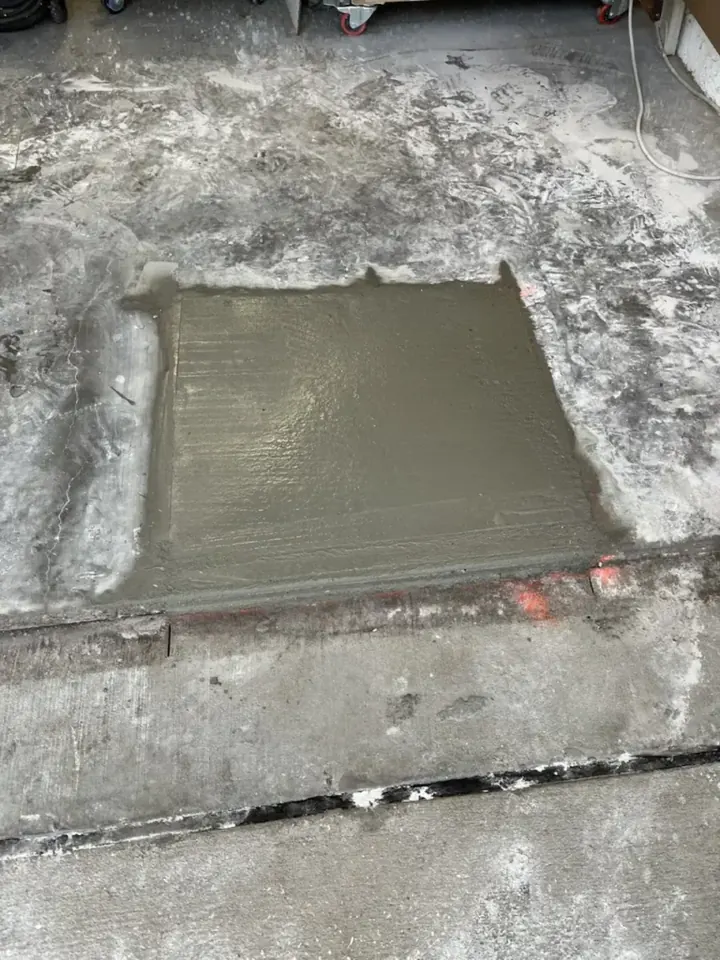
Our work
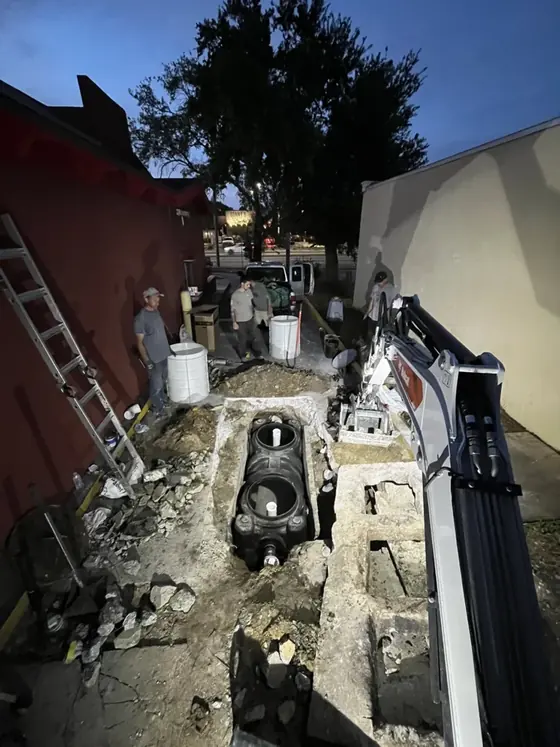
Excavation, slab work and new lines from jobs this crew ran.
Why there's no price on this page
Sewer work is the job where a phone quote is furthest from the truth. Ten feet of PVC in a sandy yard and forty feet under a tiled floor are the same sentence to describe and nothing alike to do.
The camera is what turns a guess into a number. After that you get a price with the footage to justify it, and nothing starts until you say so.
- How long the run is, and how deepDepth drives the excavation more than length does.
- What's on top of itGrass, driveway, patio, or a tiled floor inside the house.
- Spot repair or the whole runOne defect versus a line that's failing everywhere.
- Permit and inspectionSet by your city or county, and included in your quote.
- What's in the wayA mature tree, a utility crossing or a neighbour's driveway changes the approach.
- How far restoration goesBackfill and compaction, sod, concrete, tile. Agreed in writing beforehand.
What people ask
Is any of this the city's responsibility?
Generally the lateral from your house to the connection is yours and the main in the street is theirs, but where exactly that line of responsibility falls varies by jurisdiction. It's worth establishing before anyone digs — if the fault turns out to be past your boundary, that's a call to the utility, not an invoice from us.
Will my insurance cover it?
Ask your carrier — we're plumbers, not adjusters. What we can say is that policies often treat the resulting damage differently from the pipe itself, and that camera footage plus a dated report is exactly the evidence an adjuster asks for. Photograph everything before it's cleaned up.
Do we have to move out during an under-slab job?
Often not, but it's genuinely disruptive — concrete cutting is loud and dusty, and a bathroom may be out of use for part of it. We'll tell you honestly which rooms are affected and for how long before you commit, so you can decide whether to stay.
Can't you just keep cabling it once a year?
For a root intrusion in otherwise sound pipe, a maintenance interval is a legitimate strategy and cheaper than replacement — plenty of people run that way for years. For a collapsed section or a belly it isn't, because the pipe is getting worse between visits. The camera tells you which situation you're in.
What about my trees?
We route around what we can, and we tell you up front if a tree sits directly over the line and can't be worked around. Some municipalities also protect certain trees, which affects the plan — another reason to locate precisely before digging rather than after.
I'm buying a house. Is a sewer scope worth it?
On anything built before the mid-seventies, yes — a standard home inspection does not put a camera down the sewer. It's a small cost during the inspection period against a repair that becomes entirely yours the moment you close.
My yard smells but nothing's backing up.
That's worth looking at rather than waiting. A line can be cracked and leaking into the soil for a long time while still draining fine — which is exactly the situation where soil washes out and the slab starts moving. Smell first, backup later is a normal order of events.
Find out what's actually down there
Camera first, footage in your hands, and a number based on what we both saw. If it's a clog rather than a line, we'll clear it and tell you so.