
No hot water is a today problem. The unit you pick is a ten-year one.
We'll get you hot water back first. Then — only if you're replacing — we'll tell you what Tampa Bay's water does to each type of heater, using a Department of Energy lab report rather than a brochure.
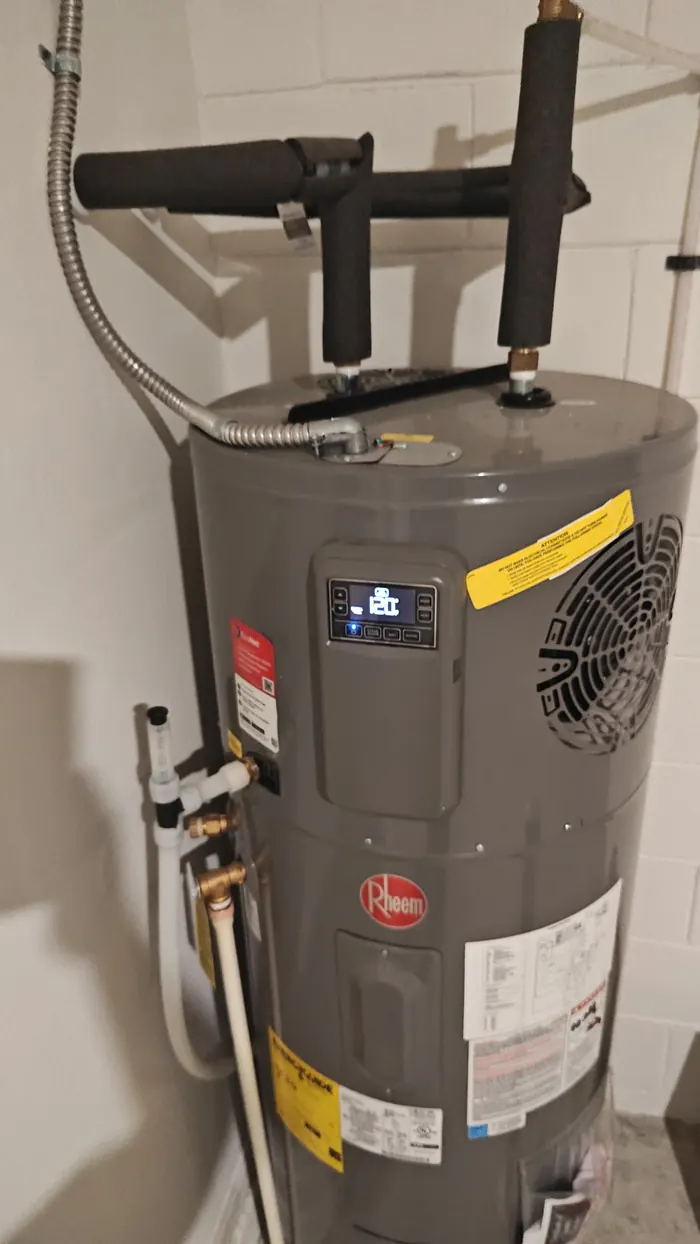
One of these settles it immediately. The rest are a judgement call.
Plenty of water heater problems are a part, not a unit. We'd rather sell you a thermocouple than a tank you didn't need.
Water coming from the tank itself — that's a replacement, and that's not a sales line
A steel tank rusts from the inside out. Once it's through, there is nothing to repair — you can't weld a rusted shell back to holding pressure. If water is coming from the body of the tank rather than a fitting on top, shut the supply and the power or gas off, and call. A tank that's weeping today can let go all at once.
No hot water at all
Often a thermocouple, igniter, thermostat or upper element — all repairs. On an older unit we'll tell you honestly whether the repair is worth putting into it.
Runs out much faster than it used to
Usually sediment taking up volume at the bottom, or a failed lower element doing none of the work. A flush sometimes buys it back.
Rumbling or popping when it heats
That's water flashing to steam under a layer of hardened sediment. It's the sound of a tank working harder than it should and wearing out sooner.
Rusty water from the hot side only
Cold runs clear, hot runs brown. The tank lining is going, and that one is usually terminal even if it hasn't leaked yet.
It's past ten or twelve years old
Check the serial sticker — the date is usually encoded in it. Past that age, money going into repairs is money you won't get back out.
It's in the attic or over finished space
Not a fault — a risk. When a tank in a Florida attic lets go, the damage bill dwarfs the heater. Worth replacing on your schedule, not its own.
Both are good answers. They're good at different things.
Anyone who tells you tankless is always better is selling tankless. Here's the version we'd give a neighbour.
Storage tank
Cheaper to buy and to install, drops into the same space as the old one, and delivers a big simultaneous draw happily — two showers and a dishwasher at once is what a tank is for. It keeps 40 or 50 gallons hot around the clock whether you use it or not, and it takes up a closet.
Tankless
Heats on demand, so it never runs out and it isn't paying to keep a tank warm at 3 AM. Wall-mounted, so the closet comes back. The catches are real: a bigger gas line and different venting are often needed, it has a limit on how much it can heat at once, and in hard water it has to be descaled on a schedule — see the next section, which is the part most people find out too late.
How we'd actually advise youReplacing on short notice with no gas or venting changes budgeted? Tank. Remodelling anyway, want the closet back, and willing to maintain it? Tankless, and let's talk about your water first. We install both and we don't earn more for steering you.
Get it sized on site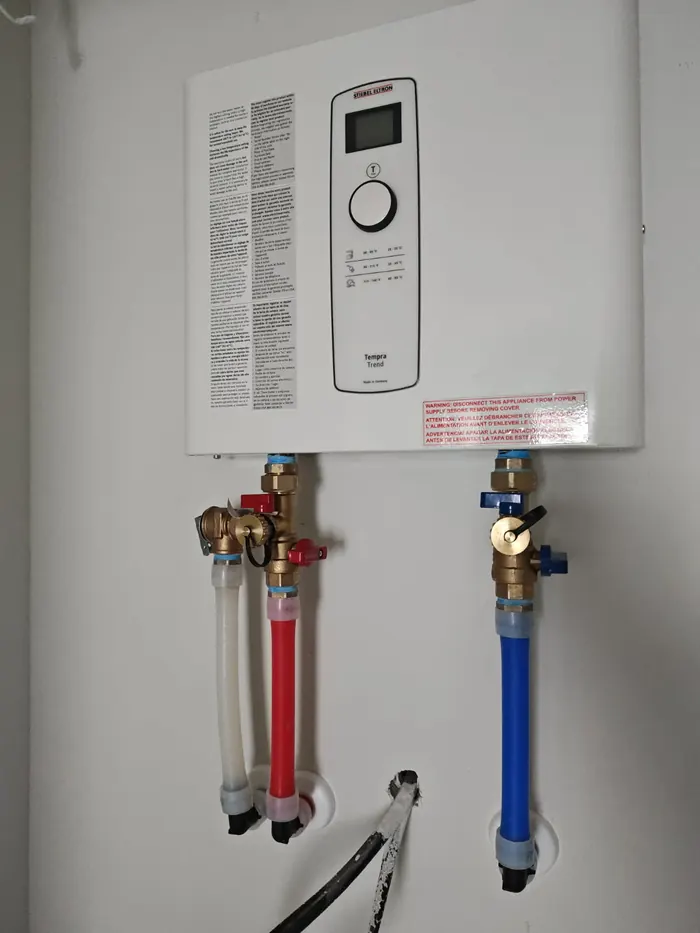
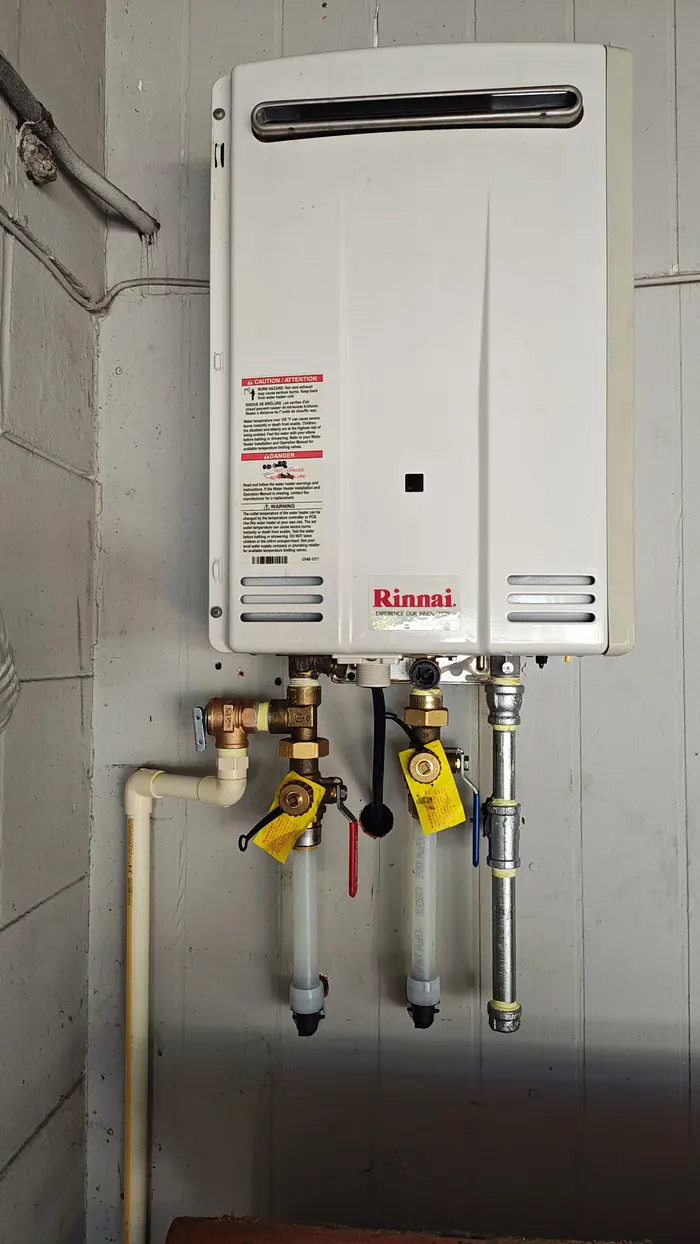
Your water is hard. Here's what a DOE lab measured it doing.
This is the section no brochure includes, and it's the one that decides whether your next heater lasts.
Pinellas County's own 2025 report puts total hardness at 217 mg/L, ranging 189–244 — that's 11.1 to 14.3 grains per gallon. The City of Tampa reports 211 mg/L, or 12.3 grains. On the USGS scale, anything over 180 mg/L is "very hard".
Straight from the utilities' annual water quality reports — we list every one, with links, here.
Gas tank
In accelerated testing reported by a US Department of Energy laboratory, scale took a gas storage heater from 70.4% down to 67.4% efficiency in the equivalent of two years — and it keeps going from there.
Tankless
In the same testing, tankless units on very hard water failed from scale plugging in 1.6 equivalent years and needed deliming before they would run again. Descaling isn't an upsell on a tankless here — it's the maintenance the unit is designed around.
Plan the descaling before you buyElectric tank
Hard water did not appear to hurt efficiency or tank life on electric storage heaters in that testing. What it shortens is the lower heating element once sediment buries it. An annual flush handles most of that.
Least affectedRead that fairly. Those tests ran at around 26 grains per gallon — roughly double what comes out of a Tampa Bay tap — and deliberately accelerated. They aren't a prediction that your tankless dies in 1.6 years. What they establish is the mechanism and the direction: tankless is the most scale-sensitive of the three, electric tanks the least, and in water this hard, maintenance intervals matter more than brand.
And the part a softener salesman won't tell you. Softened water is easier on a tankless but harder on the sacrificial anode rod inside a steel tank — the same DOE report recommends an annual anode inspection once you're on softened water. If you soften and you have a tank, we check the rod while we're there. That's how you get both benefits instead of trading one problem for another.
Source: PNNL-22921, "Impacts of Water Quality on Residential Water Heating Equipment", prepared for the US Department of Energy, reporting the Battelle Memorial Institute study for the Water Quality Research Foundation. Hardness figures from the 2025 utility water quality reports.
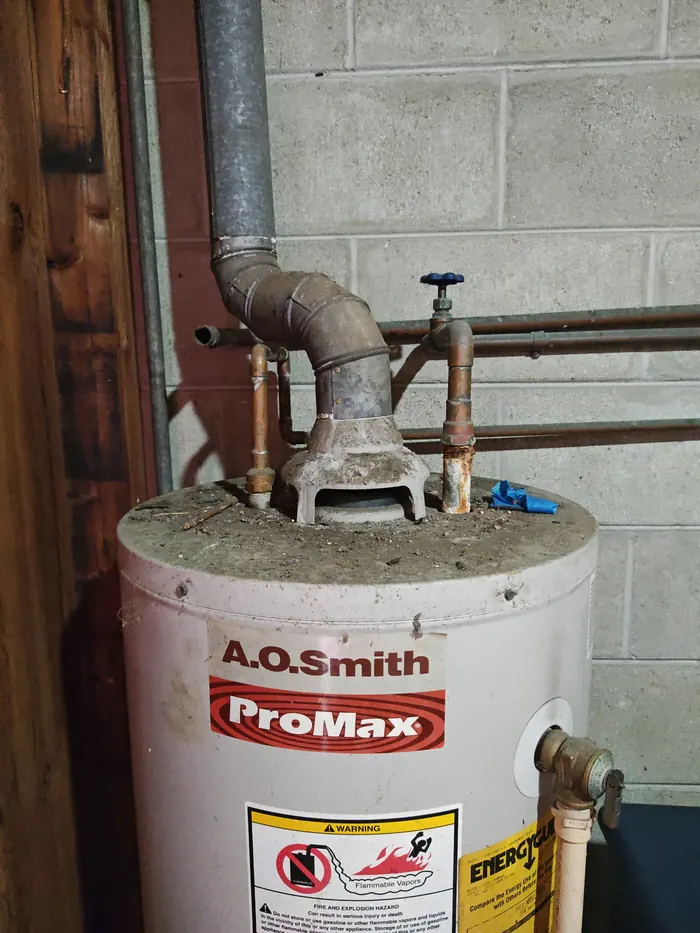
The difference between a swap and an installation
A water heater is one of the easiest jobs to do cheaply and badly. These are the parts that get skipped — and the parts an inspector looks for.
A permit, and an inspection
Most Florida jurisdictions require a permit to replace a water heater — gas, electric or tankless, even like-for-like. A few have narrow exceptions. We confirm yours before we schedule. Permit fees are included in your quote.
T&P valve and a proper discharge line
The temperature and pressure relief valve is the thing standing between a failed thermostat and a genuinely dangerous situation. It needs the right discharge pipe, routed to the right place.
Expansion tank on a closed system
If your house has a check valve or pressure reducer at the meter, heated water has nowhere to expand to. The expansion tank is what stops that pressure hammering the whole system.
Drain pan and a route for the water
Required where a leak would do damage — attics and anything over finished space. A pan with nowhere to drain to is decoration, so the line matters as much as the pan.
Sized to the house, not to the box it replaces
Bathrooms, people, and whether two showers run at once. Tankless especially is sized on flow and temperature rise, not on gallons — the wrong size is lukewarm water in January.
Gas line and venting checked, not assumed
Tankless usually needs more gas than the old tank did, and different venting. Finding that out on installation day is how a one-day job becomes three.
Why there's no price on this page
The unit is the part everyone shops. It's rarely the part that decides the number — the gas line, the venting, the expansion tank, whether it's in an attic with no easy route, and what your jurisdiction charges for the permit all move it more than the badge on the front.
You get the number on site, with the options laid out, before anything comes off the truck.
- Tank, or tanklessDifferent unit, different install, different labour.
- Gas line and ventingUpsizing or re-routing either one is real work.
- Where it livesA garage swap and an attic swap are not the same day.
- What code needs addingExpansion tank, pan, drain line, updated shut-offs.
- Permit feesSet by your city or county, and included in your quote.
- When you need itAfter-hours work is billed at 1.5× the regular rate.
What people ask
Can you do it today?
Often, for a like-for-like tank swap. Tankless conversions usually can't be same-day, because gas and venting have to be checked and sometimes changed. Call rather than text if you have no hot water at all — the dispatcher can tell you quickly which one you're looking at.
How long do they actually last here?
Manufacturers quote ranges; what shortens them locally is scale and, on tanks, a spent anode rod. We won't give you a number we can't stand behind for your house — what we will tell you is that an annual flush and an anode check are the cheapest years you'll ever buy.
Is tankless worth it in Tampa Bay?
It can be excellent — endless hot water, closet back, no standby loss. But it is the most scale-sensitive type and our water is very hard, so go in planning the descaling interval, and seriously consider softening. If you won't maintain it, a tank is the more honest choice and we'll say so.
Should I just flush it myself?
On a tank, a yearly flush is genuinely worth doing and plenty of people do it themselves. Two cautions: on a heater that has never been flushed in ten years, disturbing the sediment can expose a leak that the sludge was plugging — and an old drain valve sometimes won't reseat. If it's never been done, have someone do the first one.
Do I really need the expansion tank?
If your system is closed — a check valve or pressure reducing valve at the meter — then yes, and it's a code item, not an optional extra. Skipping it is one of the ways a cheap quote gets to be cheap, and the pressure it creates works on every joint in the house, not just the heater.
My warranty says the tank is covered. Doesn't that make it free?
A manufacturer's tank warranty usually covers the tank itself, not the labour to remove and install, not the code items, and not the permit. It's still worth claiming — bring us the model and serial and we'll help you work out what it covers before you decide.
Can you put the new one somewhere else?
Often — moving a heater out of an attic is one of the better arguments for going tankless, since a wall-mounted unit can go in the garage instead. It means new supply runs, gas and venting, so it's a bigger job than a swap. Worth pricing both ways if you're already unhappy about where it sits.
Cold shower this morning?
Call and we'll work out whether it's a part or a unit. If you're replacing on your own schedule instead, book a visit and we'll size it properly — including a look at what your water is doing to it.